From machine to history: a journey of mechanical engineers into the heart of Chinese civilization
Getting to know the heritage
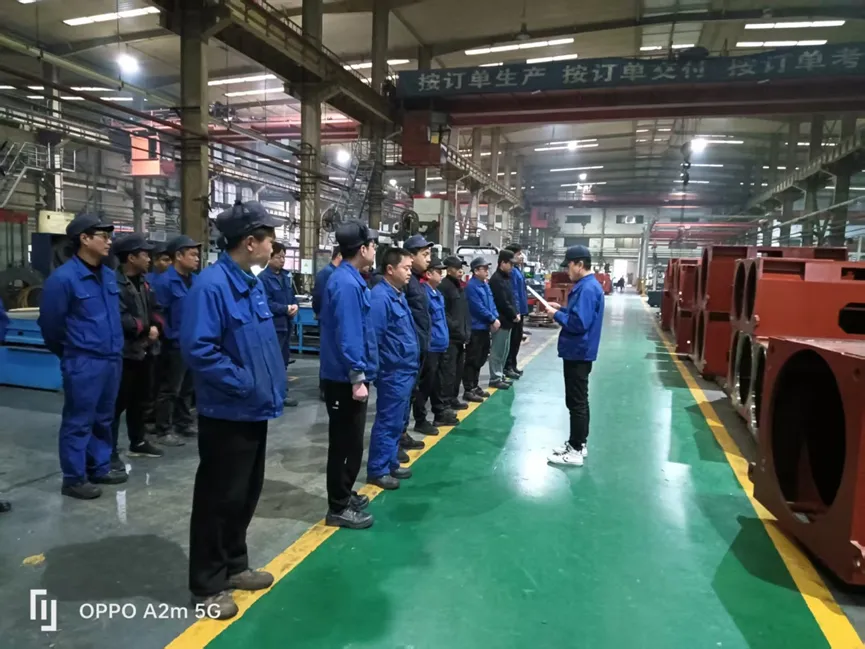
In the world of precision measurements, we are accustomed to calipers and micrometers. But recently, 16 specialists from the Stanki Plus company went on an unusual journey - to measure not the usual tolerances, but the depth of 5000 years of history.

Meeting with antiquity
The ancient art of coppersmiths revealed amazing secrets to us. As we ran our fingers along the bronze ring with the inscription “Hand-Planted Huangdi Cypress,” we realized that true “Made in China” - is not just numbers on a tolerance chart, but a thousand-year history of development.
The patterns on bronze created by our ancestors in the Neolithic era turned out to be no less perfect than the spiral grooves created by modern lathes. Ancient craftsmen mastered surface processing technologies that were amazing in their precision.
Revolutionary legacy
The Nannivan expanses revealed another side of history to us. The simple agricultural implements found here became the symbol of the greatest assemblage - of the Chinese revolution.
The land of Nanniwan holds special memories. Its soil contains not only the heaviness of cast iron shavings, but also the warmth of the bodies of the warriors who defended this land. The margins of this land are etched with oaths deeper than any machine nameplate.
Cave halls
Ancient caves, as if cast from stone, are located on a mountain slope. Their doorways resemble unfinished supports, but they firmly bear the burden of a new era. The stonework of the walls retains traces of time, and the roughness of the surface resembles the inside of a sand mold.

Symphony of the Times
The aromas of history are intertwined in an amazing unity: the smell of ink from the film “About a Protracted War” mixes with the smell of machine oil from an old workshop. Time seems to freeze, creating a unique resonance between past and present.
Return to modern times
Simple household items - a tin thermos with potholes and things from Zaoyuan - seem insignificant in a modern workshop. However, it was they who became the source of heat for the Chinese revolution.
Modern production has become a place where ancient traditions meet innovation. When the lathe touched the alloy steel again, the ancient images - of the patina of the Huangdi Mausoleum, the waves of Yanhe and the morning dew of Zaoyuan - became new elements of the production process.
Main conclusion
The new embodiment of “Made in China” is born from the unity of ancient traditions and modern technology. This is not just a marking on a product, but the result of centuries of development of culture and craftsmanship, crystallized in modern production.